
Learning Beyond the Classroom: An Afternoon at the PEM
At The Phoenix School, learning is an adventure — and sometimes that adventure begins with a simple walk down the street.
A few weeks ago, our students visited the Peabody Essex Museum, one of Salem’s greatest cultural treasures. Because we are intentionally small and deeply rooted in our community, opportunities like this are not rare field trips or special occasions. They are a natural extension of our classroom.
Close Looking, Deep Thinking
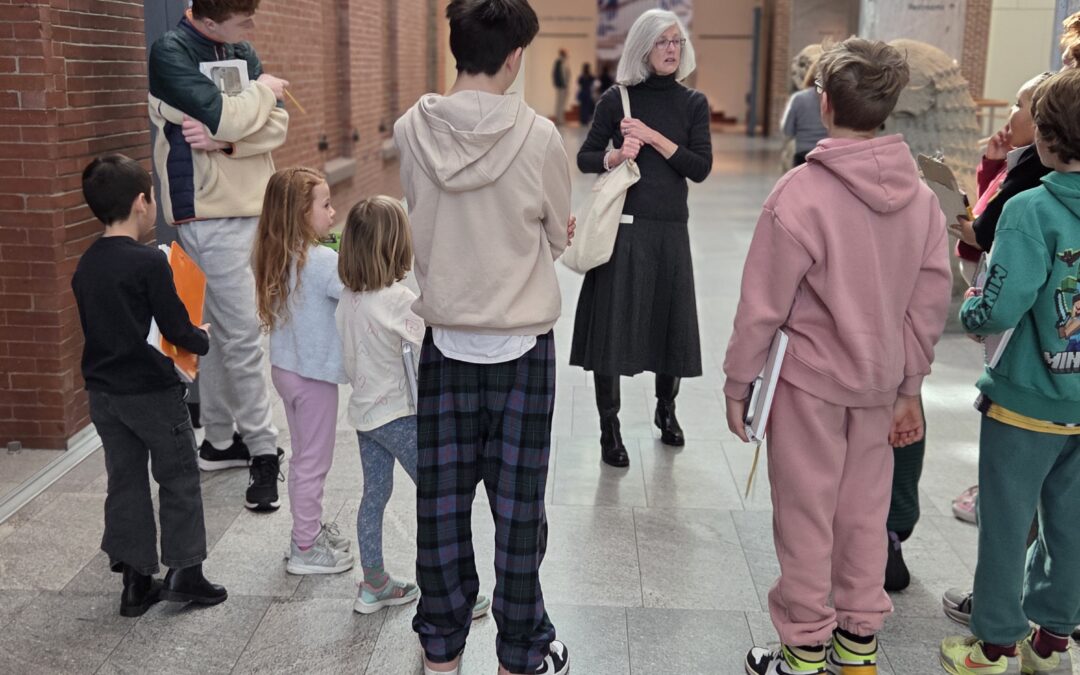
During our visit, students explored exhibits featuring glass blowing, woodworking, ceramics, and fashion. Rather than simply observing, they were invited to engage as thinkers and interpreters.
In one gallery activity, each student received a single adjective, words like “earthy” or “simple.” Their challenge was to search the gallery for a work of art that embodied that description. Students looked around, studying textures, shapes, materials, and colors. They discussed their reasoning with one another and made thoughtful decisions about which piece best matched their word.
They then sketched their chosen artwork in their wonder journals. This kind of exercise builds depth of understanding — encouraging students to look carefully, think critically, and trust their own perspective.

Materials, Craft, and Curiosity
In another interactive challenge, students examined pieces in the gallery and worked to determine whether each was made from wood or glass. What clues could they find? How did the material influence the form? What techniques might the artist have used?
These conversations extended naturally from our studies back at school, connecting art, science, craftsmanship, and design.
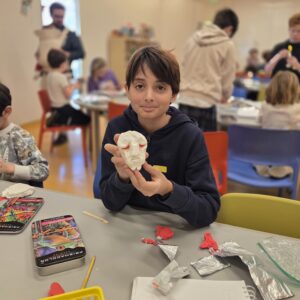
We concluded our visit in the museum’s Create Space, where students used Model Magic to design original pieces inspired by what they had seen. Some focused on texture, others on form or material. Each creation reflected careful observation and personal expression.
Why This Matters
Experiences like this exemplify what experiential, individualized education looks like in action.
At Phoenix, students don’t just learn about art — they analyze it, interpret it, question it, and create in response to it. They develop real-world skills: observation, collaboration, communication, and creative problem-solving. They learn that their voice and perspective matter.
Our ongoing relationship with the Peabody Essex Museum allows students to return again and again, building familiarity, confidence, and increasingly sophisticated thinking over time. The museum becomes not just a destination, but a partner in learning.
And perhaps most importantly, students come to see their city as a place of possibility: a living classroom filled with resources, inspiration, and connection.
When learning extends beyond four walls, curiosity expands. That is the power of a Phoenix education.