by Kerri Consalvo | Oct 14, 2026 | Blog, Educational Philosophy
What can students learn from an apple? At The Phoenix School, quite a lot!
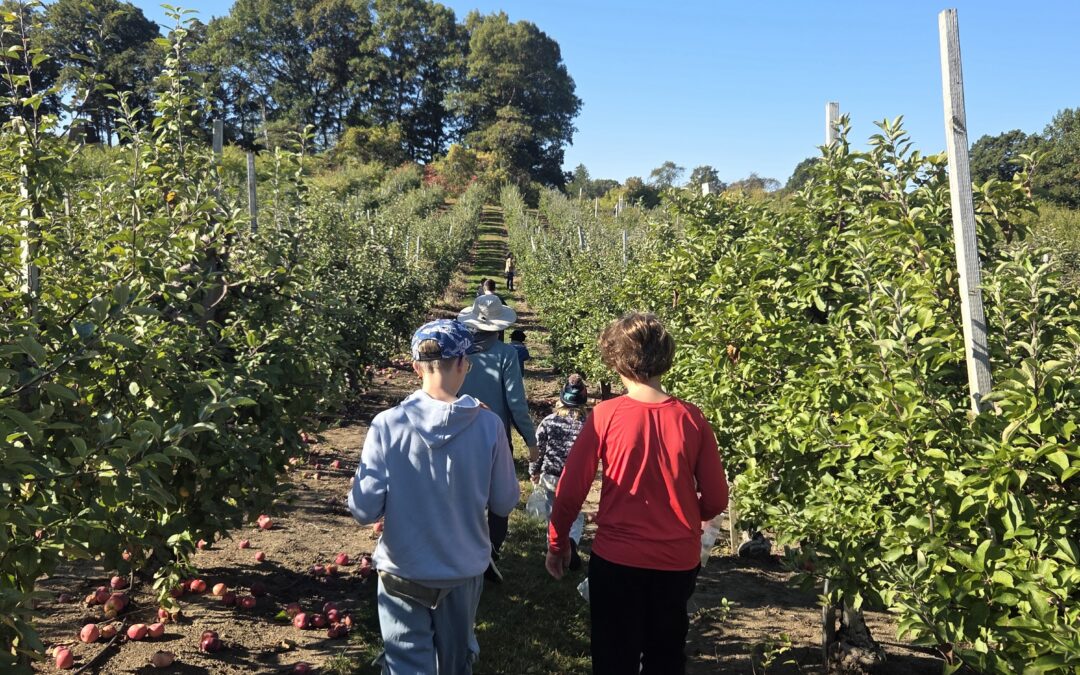
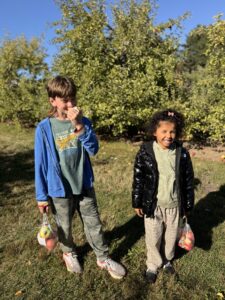
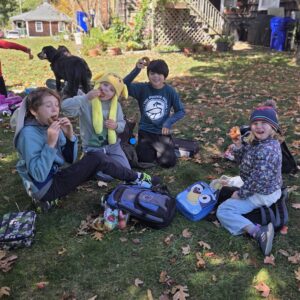
Last week, our whole school spent the day at Russell Orchards in Ipswich with Daisy, enjoying a beautiful fall day filled with music and exploration. Students went on a hayride to pick apples, learned about how apple trees grow, sang songs with Daisy and Captain Stan, visited the farm animals, and explored the farm store. We also enjoyed lunch together and had some delicious cider donuts!
But the learning began before we ever arrived at the farm and continued long after we returned to school.
Looking Closer: The Science of Apples
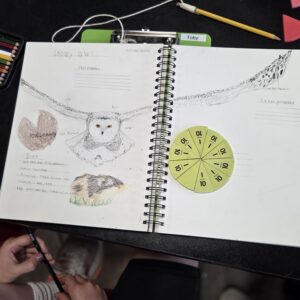
As part of their apple study, students created journal spreads exploring apples through scientific observation, drawing, reading, and writing. Working with partners, they selected apples from a variety of types, including Red Delicious, Granny Smith, and Pink Lady, and practiced scientific drawing.
Rather than outlining their drawings first, students focused on observing the apples closely and capturing what they saw. This encouraged them to slow down, notice details, and represent their observations as accurately as possible.
Students then watched a video about grafting and read an article to learn how growers can join parts of different apple trees to produce desired varieties. They drew diagrams illustrating the grafting process and wrote explanations of how it works.
Connecting Classroom Learning to the Real World
Experiences like our visit to Russell Orchards are an important part of learning at Phoenix. Students aren’t simply memorizing facts about apples or reading about how fruit grows. They’re observing, asking questions, exploring ideas, and making connections between what they learn and the world around them.
The apple study also shows how learning naturally crosses subject areas. Science connects with reading and writing. Drawing becomes a tool for careful observation. A farm visit brings classroom questions to life.
We’re grateful to Daisy and everyone at Russell Orchards for welcoming our Phoenix community and giving our students another opportunity to learn through experience. It was a wonderful day at the farm and one that will continue to inspire learning back in the classroom!
by Kerri Consalvo | Sep 16, 2026 | Blog
Our students kicked off a wildlife animal project with a simple starting point: wonder questions. Each student, within groups, chose an animal and developed questions about what they wanted to learn.
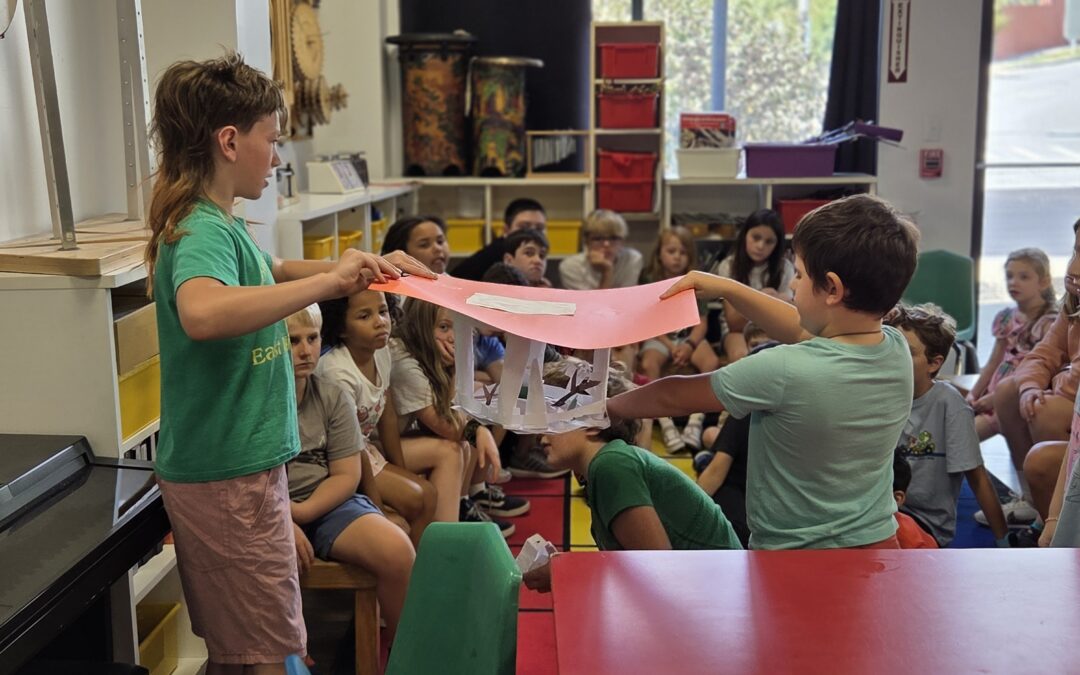
From there, their curiosity led to research, writing, art, math, and hands-on design. Students created wonder journal spreads, researched their animals, and designed and built animal enclosures using only paper and glue. They then carefully drew their enclosures in their math journals, making sure their measurements were accurate.
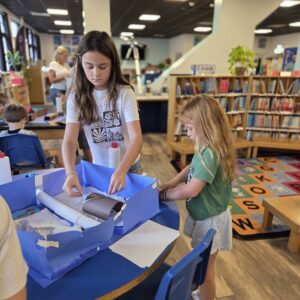
The project brought together science, writing, art, and math in a way that felt purposeful and connected. Students used what they learned about their animals to make decisions about their designs, applied measurement skills, and represented their thinking visually.
The project also gave students the opportunity to present their enclosures to the class, explaining their designs and sharing what they had learned. In doing so, they practiced communicating their ideas and learning from one another.
At Phoenix, learning doesn’t always fit neatly into one subject area—and that’s exactly the point. When students can ask questions, make choices, create, and share their thinking, different areas of learning come together in meaningful ways.
by Kerri Consalvo | Jul 1, 2026 | Blog, Educational Philosophy
Graduation is always a special moment at The Phoenix School, but one of the most meaningful traditions is hearing our eighth graders reflect on their journeys. As we listened to the Class of 2026 share their speeches, a common theme emerged: growth.
Not just academic growth, but growth in confidence, leadership, resilience, and self-discovery.
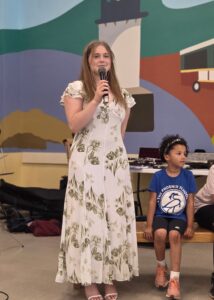 Fiona reflected on how much she has changed since arriving at Phoenix as a quiet second grader during the pandemic.
“I’ve grown from a timid, reserved, and inflexible girl to a now confident, expressive, and empathetic student.”
She spoke about learning to embrace challenges, support younger students, and recognize her own potential. Her journey is a powerful reminder that growth often happens gradually, through encouragement, reflection, and perseverance.
Gavin shared how Phoenix transformed his understanding of learning. Through choice-based projects, multiage partnerships, and real-world experiences, he discovered new passions and developed the confidence to pursue them.
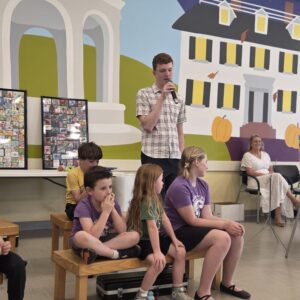 “Choice has given me the chance to enjoy much more of my learning, and through that increase the quality of my learning.”
His reflections highlighted the value of student agency and the unique opportunities that come from learning alongside students of different ages.
For Alfie, growth came through challenge. Whether learning to lead younger partners, accepting feedback on his work, or stepping outside his comfort zone during school trips, he discovered confidence by doing things that once felt impossible.
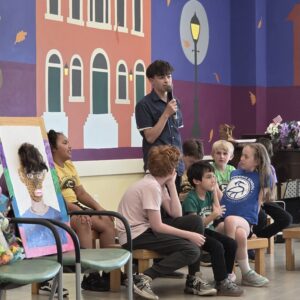 “Leadership wasn’t about getting my partner to listen. It was about learning how to support someone else.”
Looking back on his time at Phoenix, he recognized just how much he had changed. “If my fifth-grade self could see me standing at this podium today, they wouldn’t recognize the confident eighth grader I’ve become.”
Each graduate’s story is unique, but together they reflect what we hope every student gains from their time at Phoenix: the confidence to take risks, the ability to lead with empathy, the courage to embrace challenges, and the curiosity to keep learning.
To Fiona, Gavin, and Alfie: thank you for sharing your voices and your stories. We are proud of all you have accomplished and excited to see where your journeys take you next.
by Kerri Consalvo | Jun 12, 2026 | Blog, Educational Philosophy
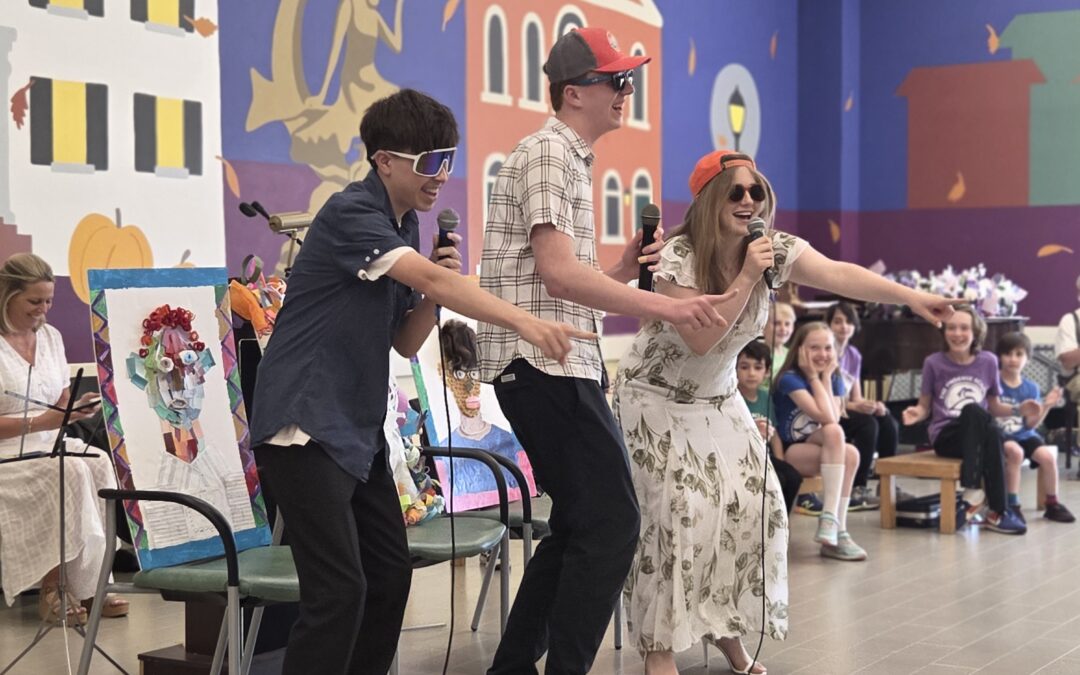
Our graduation ceremony is one of the most cherished traditions at The Phoenix School. More than just a celebration of moving on to the next grade or graduating from middle school, it is a reflection of each student’s unique journey, growth, and accomplishments throughout the year.
At Phoenix, every student has a moment to shine. One of the highlights of the ceremony is hearing each child share their proudest moment from the year. Their reflections remind us of the many ways learning happens—not just through academics, but through creativity, perseverance, friendship, and personal growth.
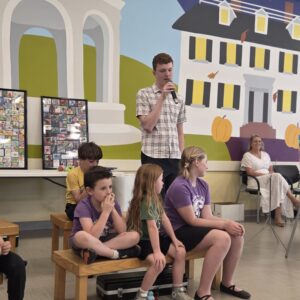
The ceremony also features heartfelt speeches from our graduating 8th graders. Their words often bring laughter, tears, and gratitude as they look back on their years at Phoenix and share their hopes for the future.
Music is another special part of the celebration. Students have the opportunity to perform with the orchestra or band and join Daisy in song, showcasing the confidence and talents they have developed throughout the year.
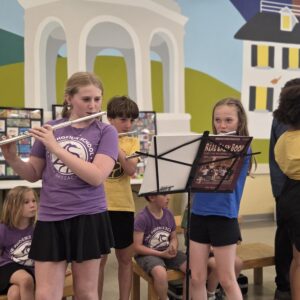
A favorite Phoenix tradition is our personalized student awards. Each child receives a special award that recognizes the qualities, strengths, and achievements that made them stand out during the year. These awards celebrate the unique gifts every student brings to our community.
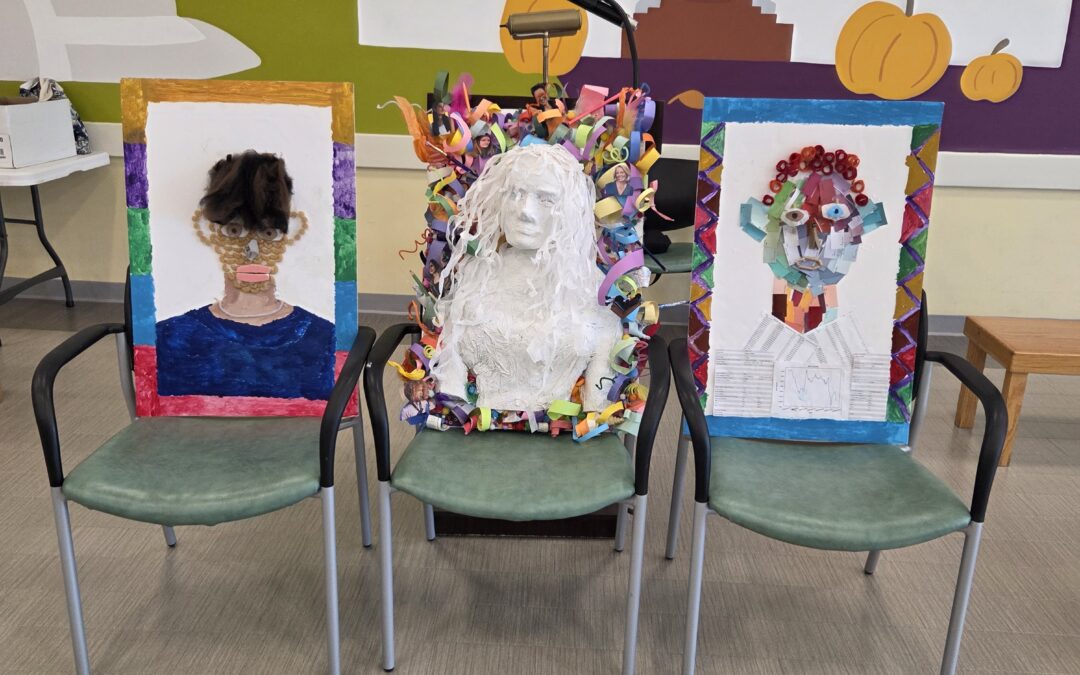
The creativity of our graduating class is also on full display. The 8th graders’ artwork is exhibited throughout the venue, alongside their impressive 3D self-portraits. These projects offer a glimpse into who they are as artists, thinkers, and individuals at this moment in their lives.
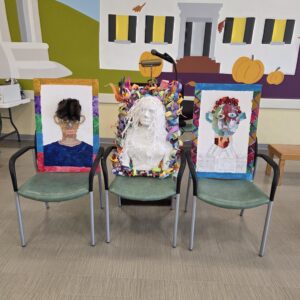
Graduation is always a beautiful reminder of what makes Phoenix so special: a community that knows each child deeply, celebrates their individuality, and honors their growth. We are incredibly proud of all our students and especially our graduating 8th graders. Congratulations to each and every one of them on an unforgettable year.
by Kerri Consalvo | May 21, 2026 | Blog, Educational Philosophy
There’s something powerful about sharing your voice—not just in a classroom, but out in the world.
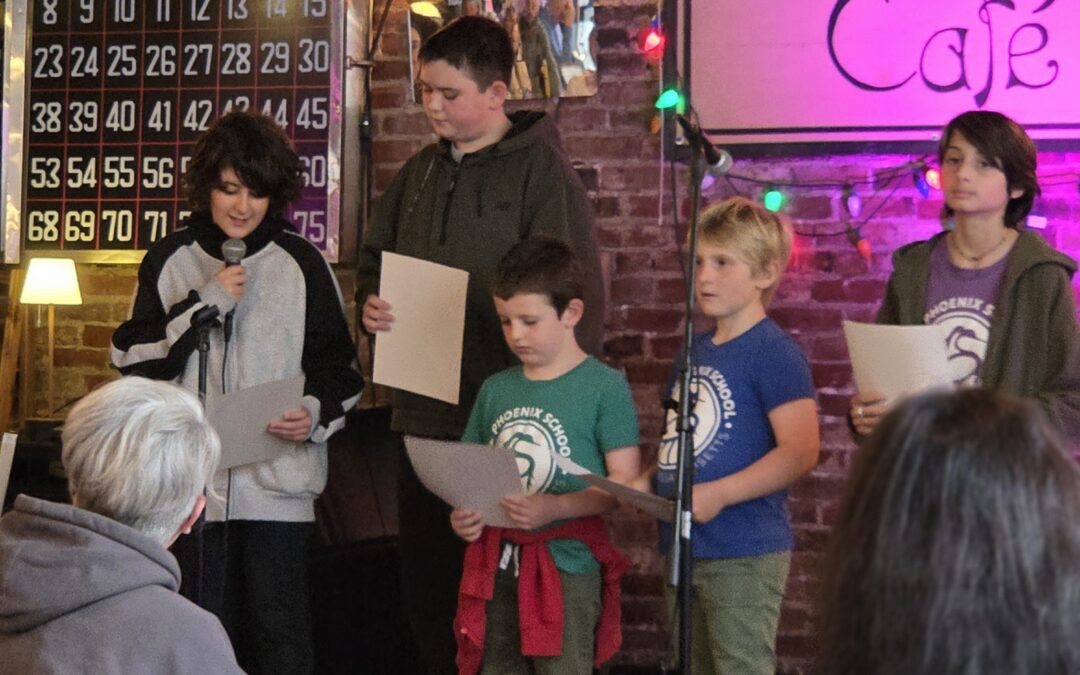
At our recent Poetry Slam at Gulu-Gulu Café, Phoenix students did just that. After spending time writing their own poetry, each student selected a piece to read in front of an audience of families, friends, and even café patrons. It was a brave step, and one they met with creativity and heart.
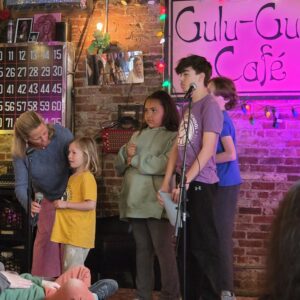
Students collaborated on group poems before stepping up to share their own individual work. Their writing reflected the depth and range of their learning experiences, with poems inspired by topics like Artemis II, our Global Wildlife Center trip, birds, and personal “I Am” reflections.
We were especially moved by the way our community showed up for one another. Some of our younger students felt nervous, but they weren’t alone. Older students stepped in as leaders, offering encouragement and standing beside them as they presented. It was a beautiful example of the multi-age connections that make Phoenix so special.
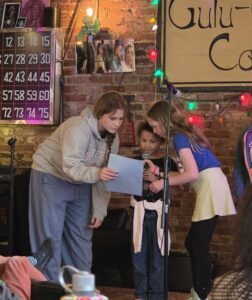
Students explored a variety of poetic forms, including cinquain, limerick, villanelle, abecedarian, and tanka. Experiences like this reflect what we value most at Phoenix: empowering students to take risks, express themselves authentically, and support one another along the way. Watching them stand in front of an audience and share their voices was truly something special.
by Kerri Consalvo | Apr 16, 2026 | Blog
Continuing our look back at our 6–8 trip to the Global Wildlife Center—here’s what the experience looked like on Day 2.
Screeches of delight reverberate throughout our van as Phoenix kids spy animal after animal materializing out of our research books to spread out across the pastures right in front of us.
Giraffes tower over rolling landscape, heads high in trees excited Jay at first glimpse. Leon exclaimed over herds of axis deer roaming the landscape, while Jake eyed feathery rheas beside the van.
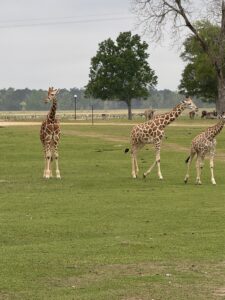
Zebras kicking up dust and dodging each other hold Gavin’s attention while graceful black bucks show off their twisted antlers to Fiona’s delight. Alfie stares in disbelief at the roaming giraffes because he cannot imagine seeing a giraffe outside of a zoo. He shouts in joy at seeing Capybaras, his personal research subject.
Our first experience at Global Wildlife Center is perfect; warm sunlight embracing us, a light breeze keeping us cool in the Louisiana spring painted by blooming shrubs, and wandering herds of wild animals capturing our attention as we head for the visitor center.
We meet Mikayla and McKale, our expert guides for the week, for an introduction to the Global Wildlife Center while Cali, the Center’s horticulturalist, explains the importance of plant management before we take a much closer peek at the animals around us.
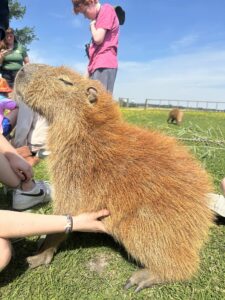
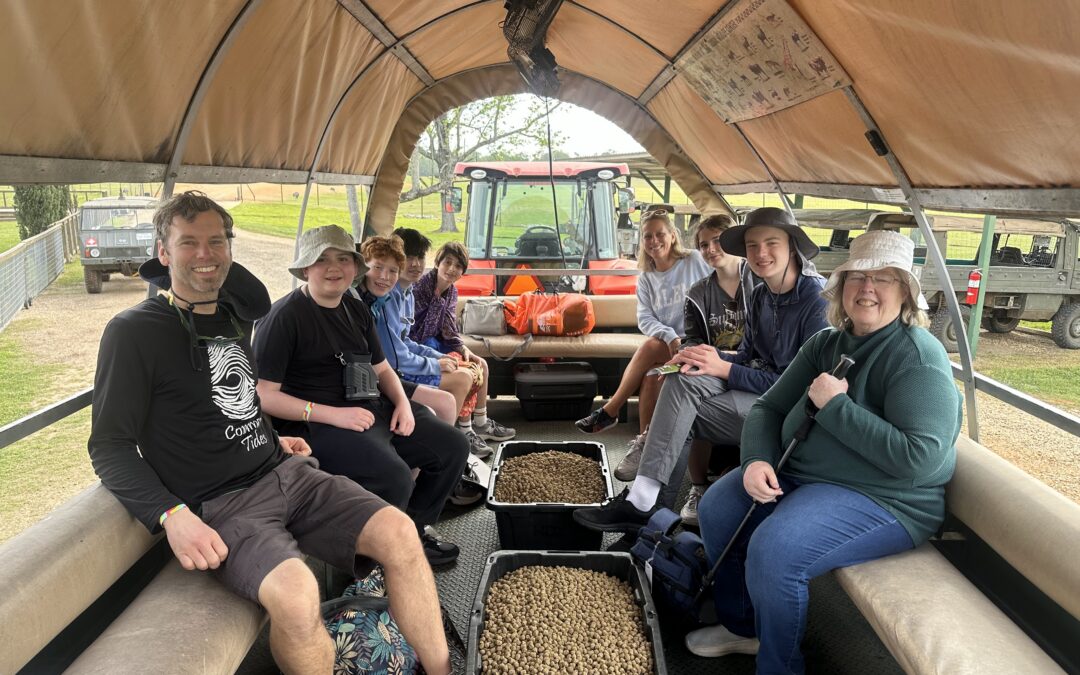
Antelope, eland, bison, countless varieties of deer, Watusi cattle, zebras, rheas, and giraffes follow us as our tractor pulls us across the landscape in open air wagons. To supplement their usual graze and hay we have plenty of healthy animal treats for the hungry creatures who clammer after us begging for handouts. Giraffes gently lean in to snuffle food pellets from our hands, deer follow scooping up leftovers from the ground. Bison and Watusi cattle reach their impressive skulls and horns close, open their mouths waiting for us to pour the tasty morsels into their mouths. Some of us are lucky to get “kissed” by a Watusi, whose spit on our hands assures 7 years of good luck. Others feel the sandpaper tongues of Bison reaching for food. Zebras kick and shove, vying for treats. We are lucky to be so close to such captivating creatures.
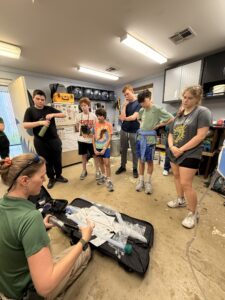
Dr. Canyon then invites us into her lab to explain how she works to make sure every animal at GWC stays healthy or gets treated if compromised. To her delight we ask question after question in true Phoenix fashion, feeling her excitement and dedication to her job as the on-site veterinarian. We examine tools she uses to diagnose and treat animals on the property. Clearly she loves her patients even if some avoid her when they need her most. After spending time in the lab, we begin to feel a bit like vets ourselves.